Thermal management is one of the most critical — and often underestimated — decisions in rugged computer specification. The choice between conduction-cooled and air-cooled platforms has downstream implications for chassis sealing, installation design, compute density, and long-term maintenance. This guide walks through the trade-offs to help you make the right decision for your application.
How Conduction Cooling Works
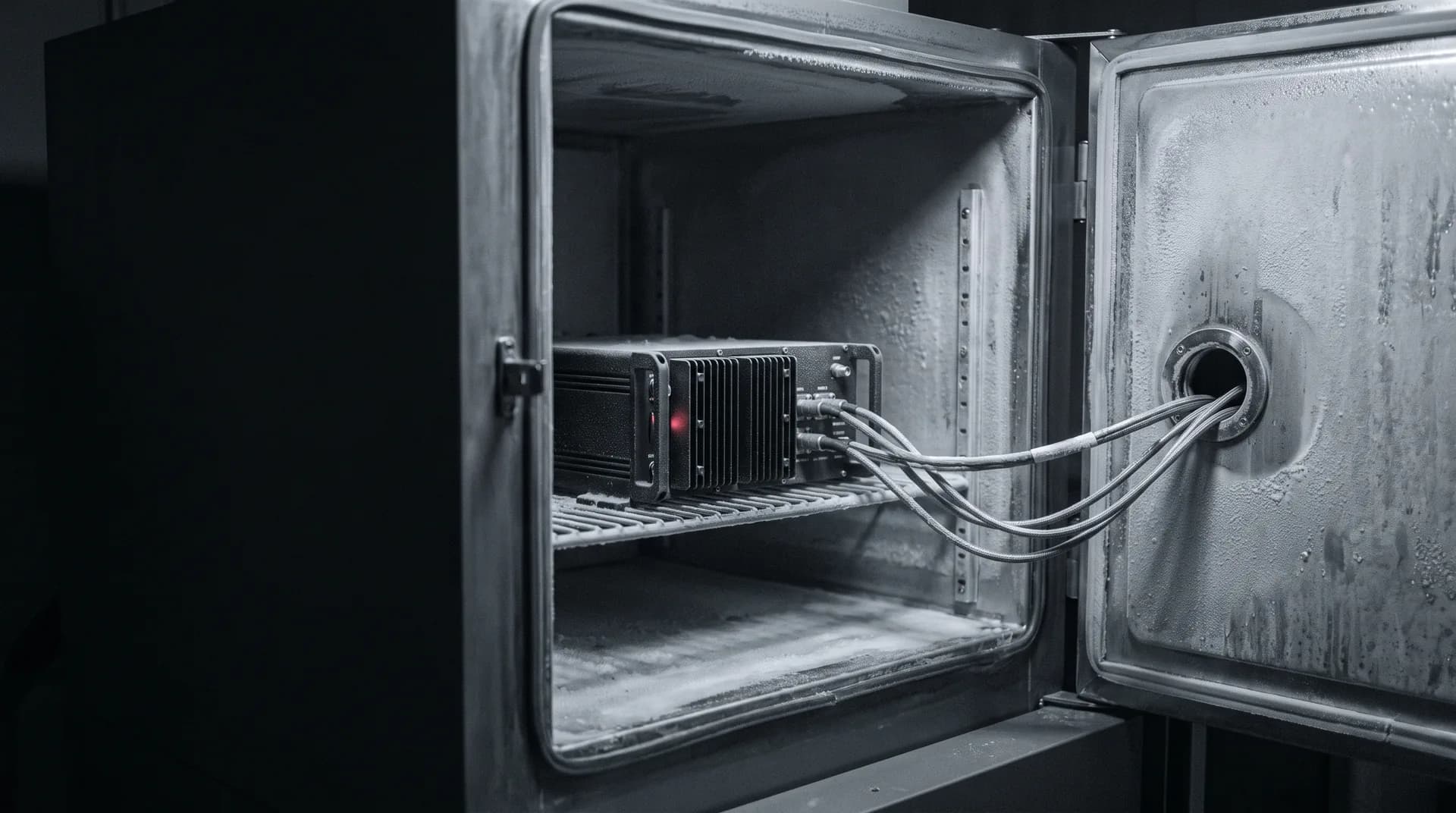
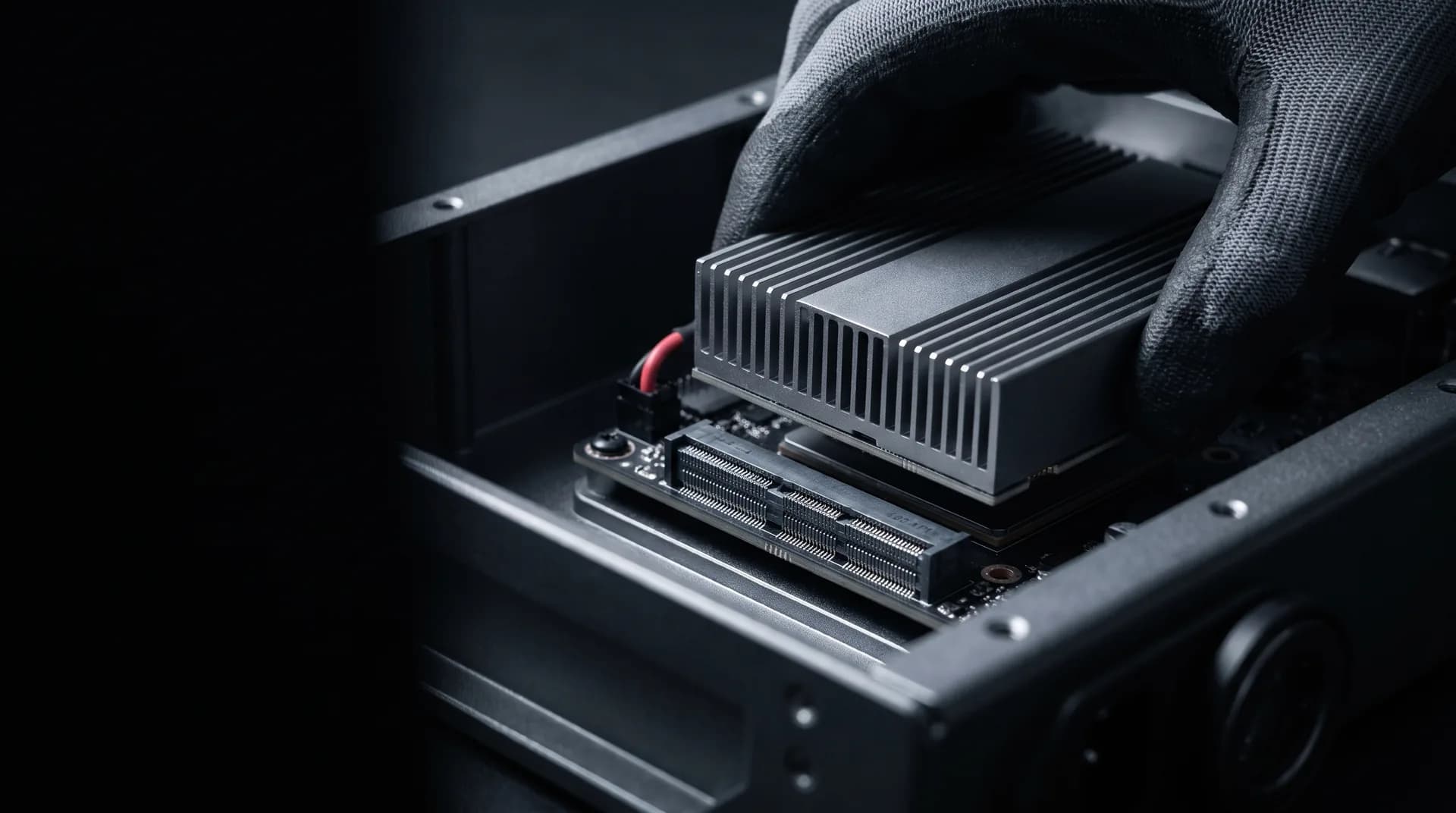
In conduction-cooled systems, heat generated by processors, memory and other components is transferred via direct metal contact (thermal interface material or wedge lock) through the chassis wall and into an external heat sink, cold plate or vehicle structure. There is no internal airflow — the chassis can be fully sealed to IP67 or equivalent. This eliminates the risk of particulate ingress, moisture and corrosive agents entering the electronics.
How Forced-Air Cooling Works
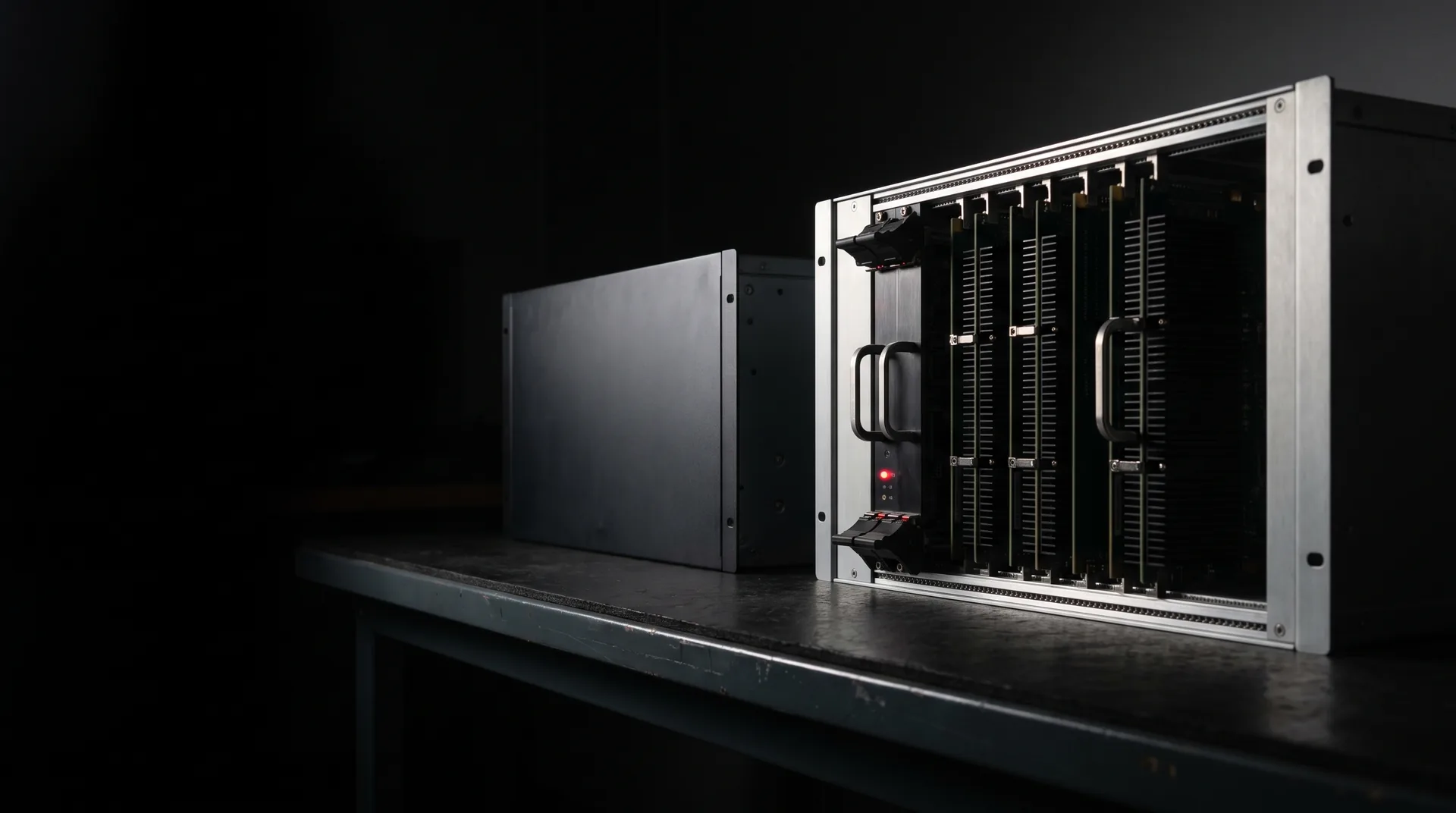
Air-cooled (or forced-air) systems use fans or blowers to move air across heat sinks and through the chassis interior. Higher airflow rates allow more heat to be removed per unit volume, enabling higher compute density — more processing power in less space. Air-cooled chassis typically use filtered air inlets to reduce particulate ingress, but the filters require periodic maintenance and the system is inherently not fully sealed.
When to Choose Conduction Cooling
- Sealed, wash-down or spray-water environments (IP67+ requirement)
- High dust, sand or salt fog exposure where filter maintenance is impractical
- Vehicle or aircraft installations where the chassis attaches to a structural cold plate or mounting surface
- Applications requiring fanless silent operation (acoustic signature reduction)
- Low to medium compute workloads where thermal dissipation does not exceed chassis capacity
- Long-duration programmes where fan reliability and replacement logistics are concerns
When to Choose Air-Cooled
- High-performance compute workloads: multi-GPU inference, radar signal processing, video transcoding
- Rack-mount installations in shelters, C2 containers or ships where ambient air is conditioned
- Programmes where maximum processing density per rack unit is the primary constraint
- Systems where filter maintenance is manageable within the maintenance schedule
- Cost-sensitive programmes where conduction-cooled form factors carry significant unit cost premium
Thermal Interface Planning for Conduction Cooling
If you select a conduction-cooled platform, you must plan the thermal interface at system level. The chassis requires adequate contact area and thermal conductivity to the mounting surface. Thermal interface materials (TIM — pads, grease or phase-change films) must be specified. The external surface temperature of the mounting structure must remain within the platform’s operating limits under worst-case ambient conditions and computing load. Engage your rugged computer supplier early in the mechanical design phase — late-stage thermal problems in conduction-cooled systems are expensive to resolve.
Hybrid Approaches
Some platforms offer configurable cooling: the same chassis can be supplied with a conduction-cooled lid or an air-cooled fan tray, allowing procurement of the same unit in two thermal configurations. This reduces qualification burden if your programme includes both ground and vehicle-mounted variants with different sealing requirements.