When specifying rugged electronics for defence applications, engineers frequently encounter two key environmental standards: MIL-STD-810 and RTCA/DO-160G. Both address similar physical phenomena — temperature, vibration, shock, humidity — but they originate from different domains and apply different test procedures. Understanding the differences is essential to specifying the correct qualification evidence from your supplier.
Origins and Scope
MIL-STD-810 is a US Department of Defense standard covering environmental engineering considerations and laboratory tests for ground, naval and airborne military equipment. It is broad in scope, covering over 20 test methods from temperature cycling to explosive atmosphere. RTCA/DO-160G (Radio Technical Commission for Aeronautics, Document 160, revision G) is the standard for environmental conditions and test procedures specifically for airborne equipment. It is produced by RTCA and is closely aligned with EUROCAE ED-14G in Europe.
Temperature Testing
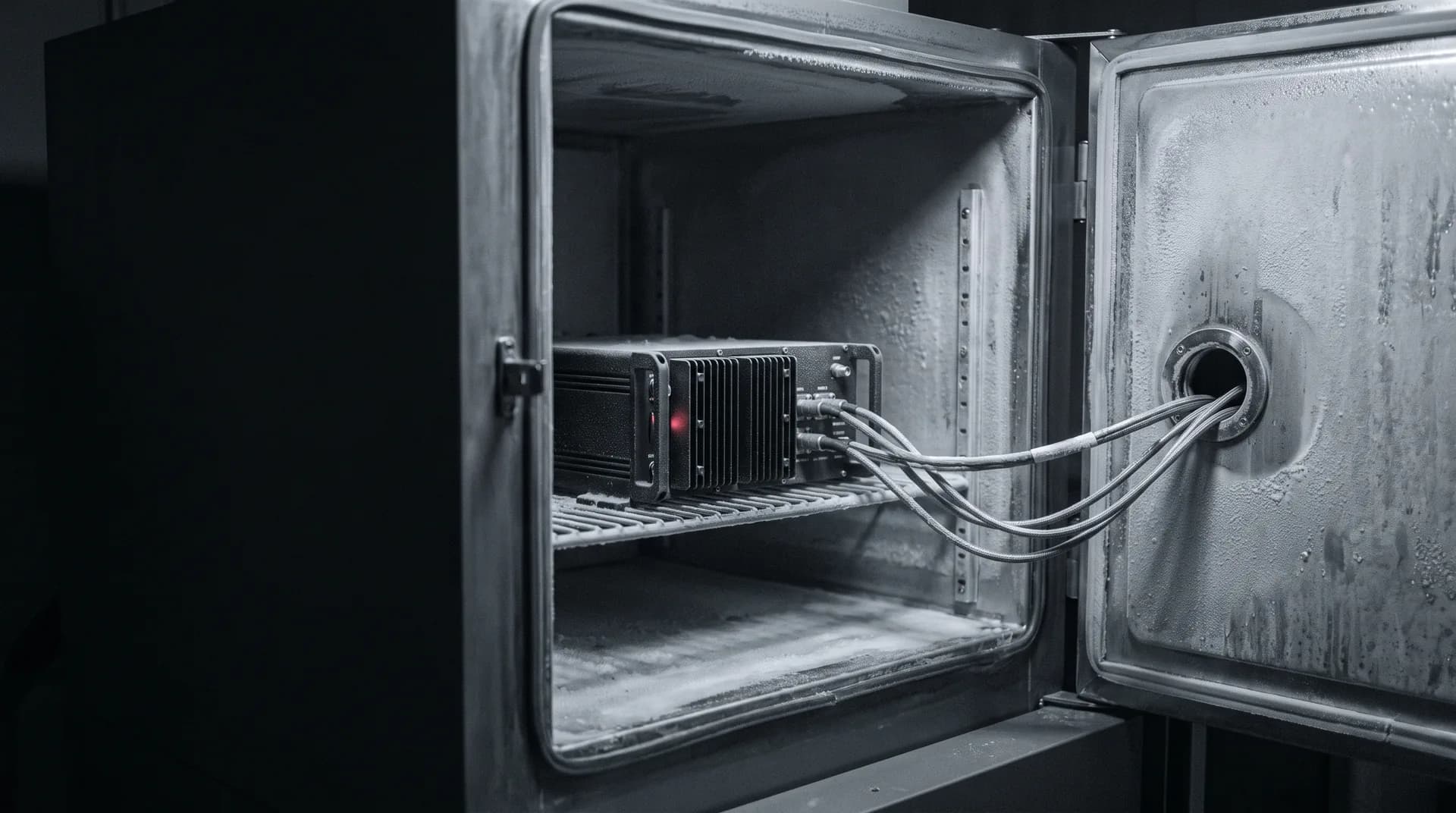
- MIL-STD-810 Method 501/502: Operating and storage temperature, low and high. Typical ranges: −55 °C to +85 °C operating for military equipment.
- DO-160G Section 4: Temperature and altitude categories from A1 (mild) to F (severe cold). Defines operating altitude up to 70,000 ft.
- Key difference: DO-160G integrates altitude into temperature testing because reduced air pressure affects both cooling and insulation. MIL-STD-810 treats altitude (Method 500) separately.
Vibration and Shock
- MIL-STD-810 Method 514: Vibration — specific platform categories (ground, aircraft, helicopter) with tailored power spectral density (PSD) profiles.
- MIL-STD-810 Method 516: Shock — functional shock and crash hazard shock procedures.
- DO-160G Sections 7 & 8: Vibration and shock — defined by aircraft category (fixed-wing, rotary-wing, turboprop). Typically requires vibration at specific g-RMS levels and sweep rates.
- Key difference: DO-160G vibration levels are lower than many MIL-STD-810 helicopter profiles, but DO-160G is internationally recognised for civil and military aviation certification.
EMC: Section 21 vs MIL-STD-461
DO-160G Section 21 covers radio frequency susceptibility and emission, specifically for aircraft systems. MIL-STD-461 (a separate standard, typically used alongside MIL-STD-810) covers a broader range of conducted and radiated emissions and susceptibility tests for defence equipment. For military airborne programmes, suppliers may be required to meet both DO-160G Section 21 and MIL-STD-461.
Which Standard Applies to Your Programme?
- Military airborne (fixed-wing, rotary-wing, UAV): Typically DO-160G, often with MIL-STD-461 for EMC.
- Ground military (command post, shelter, vehicle): MIL-STD-810 + MIL-STD-461.
- Naval: IEC 60945 or MIL-STD-167/461 (not DO-160G).
- Civil aviation: DO-160G is mandatory for aircraft certified to CS-25 or FAR Part 25.
- Mixed-domain programmes: Your system integrator will specify which evidence is required — ask for the Equipment Qualification Test Requirements (EQTR).
What to Ask Your Supplier
- Do you hold test reports for DO-160G and/or MIL-STD-810 qualification?
- Are the reports for the specific configuration I am procuring, or for a representative similar unit?
- What test laboratory conducted the qualification testing (accredited to ISO/IEC 17025)?
- Are environmental test reports available for review under NDA before contract award?